
Philanthropy is often associated with writing a check to a charitable organization. Financial contributions certainly play an important role in supporting worthy causes, but meaningful philanthropy can extend much further.
At its best, philanthropy is about intentionally using available resources-money, time, expertise, relationships, or influence-to create positive change.
This broader perspective makes philanthropy accessible in different ways and encourages individuals and organizations to think more carefully about the impact they want to create.
Start With the Why
There are countless worthwhile causes competing for attention. Education, healthcare, environmental conservation, poverty reduction, community development, the arts, and many others can all benefit from additional support.
Trying to contribute to everything can make philanthropic efforts feel scattered. A more intentional approach starts with identifying the issues that matter most personally.
Perhaps someone benefited from a scholarship early in life and wants to create similar opportunities for students. A business leader may feel passionate about entrepreneurship and decide to mentor young founders. Someone whose family has been affected by a particular issue may choose to support organizations working in that area.
A personal connection to a cause can make giving more meaningful and sustainable.
Money Is Only One Resource
Financial donations are important, but they are not the only way to make a difference.
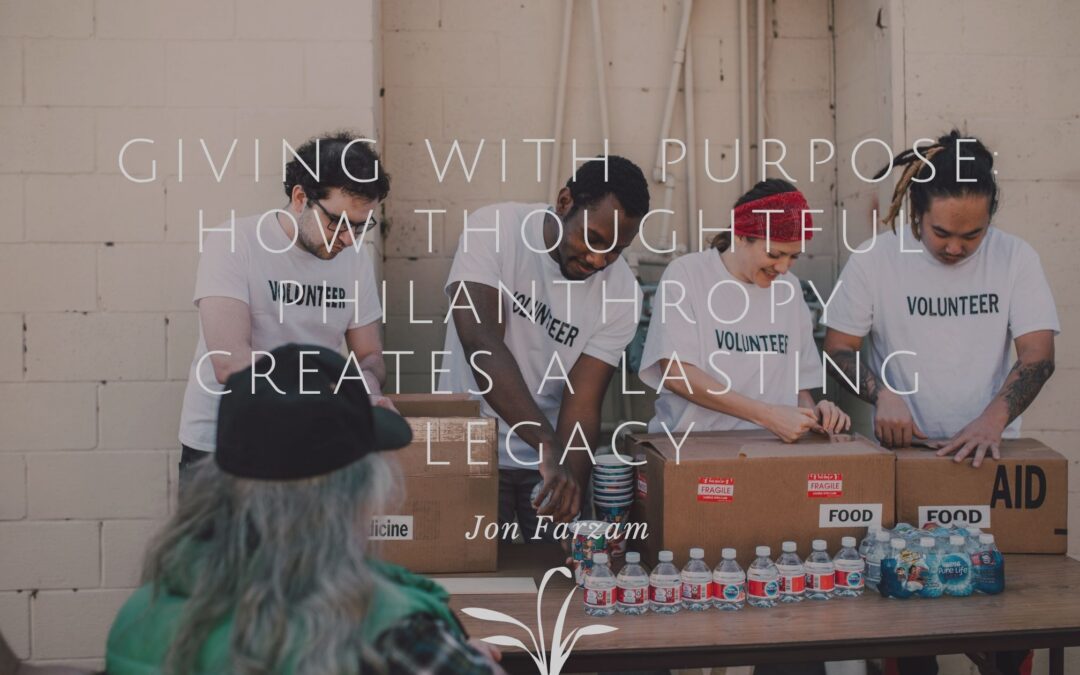
Time can be extraordinarily valuable. Volunteering at a community organization, serving on a nonprofit board, mentoring someone at the beginning of a career, or helping organize a fundraising initiative can provide meaningful support.
Professional expertise can be equally useful.
An accountant could help a small nonprofit think through financial processes. A marketing professional might help an organization communicate its mission more effectively. An entrepreneur could mentor aspiring business owners. A well-connected professional may be able to introduce a charitable organization to potential partners or supporters.
Thinking beyond financial contributions opens the door to a much broader definition of giving.
Look for Sustainable Impact
Immediate assistance is sometimes exactly what a community needs. At other times, philanthropy can have a greater long-term effect by addressing the conditions behind a problem.
Education provides a useful example. Helping one student purchase school supplies can make an immediate difference. Supporting a scholarship program can potentially change that student’s educational trajectory. Funding broader educational initiatives may create opportunities for many students over an extended period.
None of these approaches is inherently better than another. They simply demonstrate why thoughtful philanthropy requires understanding the desired outcome.
Before committing resources, donors can ask questions such as: What problem is this organization addressing? How does it approach that problem? How will my contribution be used? What would meaningful progress look like?
Those questions can turn generosity into a more deliberate strategy for impact.
Businesses Can Participate, Too
Philanthropy does not have to be limited to individuals.
Businesses can support their communities through donations, employee volunteer programs, nonprofit partnerships, sponsorships, mentorship, and other initiatives. When these efforts align naturally with a company’s values, they can become a meaningful part of its culture.
Employees can also play a role in determining which causes an organization supports. Inviting employees to recommend nonprofits or participate in volunteer initiatives can create a stronger connection between a company’s philanthropic activities and the people carrying them out.
The objective should not simply be to appear charitable. The strongest initiatives begin with a genuine desire to contribute.
Build a Legacy Through Consistency
A single generous act can have a meaningful impact, but consistency can multiply that impact over time.
Supporting the same organization for several years allows donors to understand its work more deeply. Mentoring multiple people over the course of a career can influence an entire generation of professionals. Establishing an annual tradition of volunteering can inspire family members, employees, or colleagues to participate.
This is where philanthropy becomes more than an occasional activity. It becomes part of how a person or organization chooses to engage with the world.
Ultimately, a philanthropic legacy does not have to be measured by the size of a donation. It can be measured by opportunities created, people supported, knowledge shared, and communities strengthened.
The most important question may therefore be surprisingly simple: Given the resources available to you today, where could you make a meaningful difference?
Answering that question-and continuing to act on it-can be the beginning of an impact that lasts far beyond any single contribution.